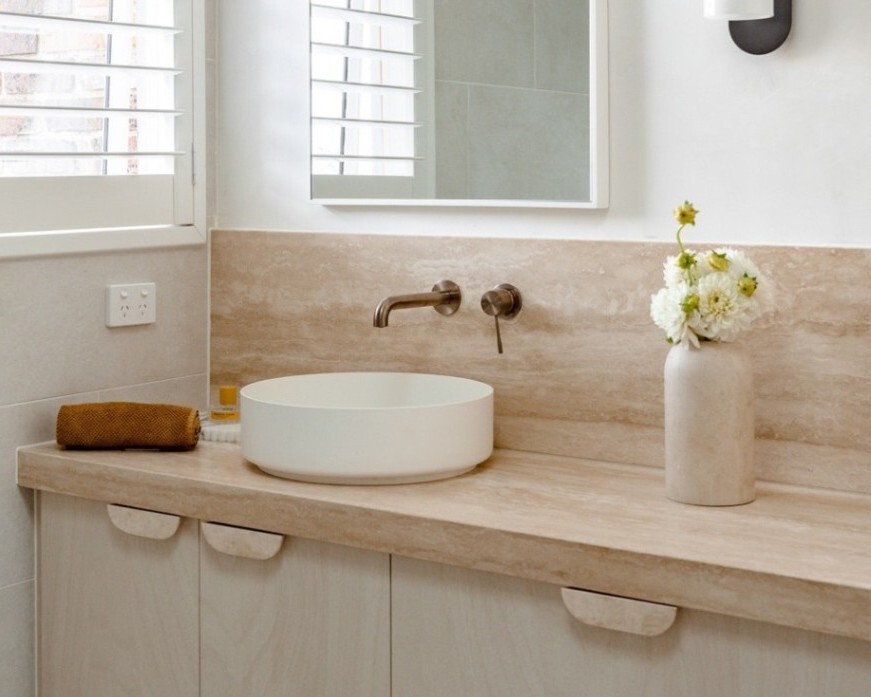
Limestone Unlocked: The Ultimate Guide to Floors, Benchtops, Bathrooms & Design Inspiration

The Allure of Limestone: Why It Still Reigns Supreme in Modern Design
Few natural materials capture Australia’s relaxed sophistication quite like limestone. Soft underfoot, visually warm and gently mottled with fossils and mineral veins, it delivers a tactile calm that pairs perfectly with our sun-drenched architecture. Whether you’re refreshing a coastal home in Noosa or building a sleek inner-city terrace in Sydney, limestone brings an authentic, earthy elegance that synthetic surfaces can’t mimic.
This ultimate guide walks you through everything you need to know about limestone — from its natural origins and finishes to the smartest ways to use it on floors, benchtops and bathrooms. You’ll learn the real limestone pros and cons, discover practical care tips, and see design ideas that genuinely work in Australian conditions.
Limestone 101 — Origins, Composition & What Makes It Unique
What Is Limestone? The Science Behind the Stone
Limestone forms when layers of marine shells, coral and microscopic organisms compact over millions of years. The result is a sedimentary rock peppered with natural fossils that give each slab its own story. Its muted palette — from chalky ivory to smoky grey — comes from subtle mineral impurities such as iron or clay.
This combination of softness and subtle movement creates the quiet luxury designers love. No two pieces are alike, yet they harmonise beautifully, which makes limestone perfect for cohesive interior palettes.
🔹Designer Tip:When selecting slabs, view them in natural daylight. Limestone can shift dramatically in tone under LED lighting — a cool grey may read beige indoors.
Where Limestone Comes From: Global Quarries & Natural Variations
Australia produces superb limestone, particularly from South Australia and Western Australia, prized for density and warm neutral hues. International favourites include:
- French Limestone (Burgundy, Luberon): creamy tones, fine grain, elegant for heritage builds.
- Italian Limestone (Vicenza, Pietra Serena): smooth, architectural greys suited to minimal interiors.
- Turkish and Egyptian Limestone: light beige with pronounced fossils, affordable and versatile.
Regional geology affects hardness and porosity, so always match the origin to its purpose: denser European varieties for benchtops; softer Australian types for wall cladding or low-traffic areas.
Limestone vs Other Natural Stones
| Stone | Appearance | Hardness | Maintenance | Ideal Use |
| Limestone | Subtle, organic, matte | Medium-soft | Regular sealing | Floors, bathrooms, benchtops |
| Marble | High-gloss, veined | Harder | High care (etching) | Bathrooms, feature walls |
| Granite | Crystalline, speckled | Very hard | Low care | Kitchens, outdoors |
| Travertine | Banded, rustic | Porous | Fill & seal | Outdoor pavers |
| Quartz / Engineered | Uniform, modern | Very hard | Minimal care | High-traffic benchtops |
🔹Key takeaway:Choose limestone when you want softness and natural movement, not mirror-finish perfection. It’s the stone that whispers rather than shouts.
Limestone Types, Finishes & Grades: Choosing the Right Look
Different finishes change not only the feel underfoot but also slip resistance and maintenance:
- Honed: satin-smooth, non-reflective — ideal indoors.
- Polished: reflective, luxurious — best for walls or vanities.
- Tumbled: rounded edges, aged look — great for heritage homes.
- Brushed or Sandblasted: textured, slip-resistant — perfect outdoors or poolside.
Also Read:Ultimate Travertine Guide: What It Is, Types, Cost, Installation & Care
Why Homeowners Love (and Sometimes Regret) Limestone — Honest Pros & Cons

The Big Benefits — Warmth, Texture & Timeless Appeal
- Visual Warmth: Limestone’s soft beige and grey undertones make interiors feel grounded and serene.
- Thermal Comfort: Stays cool in Australian summers — ideal for barefoot living.
- Eco-friendly: Minimal processing compared with engineered surfaces.
- Naturally Antibacterial: Once sealed, its surface resists bacterial growth.
- Design Versatility: Works equally well with Hamptons, coastal or modern schemes.
- Value Add: A limestone feature floor or vanity elevates perceived property value.
The Drawbacks You Should Know Before Buying
- Porous Nature: Without sealing, spills can penetrate quickly.
- Acid Sensitivity: Lemon, wine or vinegar will etch the surface.
- Regular Maintenance: Needs resealing every 12–18 months in kitchens.
- Softness: Edges can chip if knocked with heavy cookware.
- Installation Weight: Requires solid sub-floor or benchtop support.
None of these are deal-breakers; they simply demand awareness and care — much like timber floors or natural marble.
How to Minimise the Downsides
- Seal properly at installation using a penetrating sealer.
- Use pH-neutral stone cleaners — avoid supermarket acids or bleach.
- Fit soft bumpers beneath chairs to prevent scratching.
- Choose denser limestones (like Jura Grey) for high-use kitchens.
- Select a honed finish to disguise minor wear.
Also Read:[Guide] What is Bluestone? | Types, Benefits, Applications, Installation & Maintenance
Limestone Pricing Guide — Costs, Sizes & Installation Insights

What Affects Limestone Cost
- Origin & Transport: Imported French or Italian limestone commands a premium over local stone.
- Thickness & Finish: 30 mm polished slabs cost more than 20 mm honed tiles.
- Fabrication Complexity: Waterfall edges, curves and mitred joins add labour hours.
- Installer Expertise: Always work with stonemasons or tilers who are experienced with natural stone installations and ensure they adhere to the relevant Australian Standards.
🔹Pro Tip:Prices vary by supplier and freight; always allow 10 % extra for off-cuts.
Limestone Sizing, Thickness & Support Requirements
Standard Tile Sizes
- Common formats include 600 × 600 mm and 600 × 400 mm, with variations such as 610 × 406 mm typical for natural stone.
- Tile thickness usually ranges from 10–15 mm for internal floors and walls.
Large Formats
- 900 × 600 mm and larger slabs (e.g. 600 × 1200 mm) are popular in premium or open-plan spaces.
- These formats demand very flat, rigid substrates and professional installation to prevent lippage or cracking.
Benchtops
- Standard natural-stone slabs are 20 mm thick.
- 30 mm (and occasionally up to 40 mm) is used for waterfall ends or statement island benches.
- Ensure cabinetry and joinery are reinforced for slabs thicker than 30 mm or for dense stones exceeding 80 kg/m².
Outdoor Paving
- Typical limestone paving thickness is 30–40 mm for patios and walkways (thicker for driveways).
- Allow 5–10 mm grout joints between pavers, with additional expansion/movement joints per Australian Standard AS 3958.1 to accommodate thermal movement.
Notes for specifiers
- Always confirm tile thickness tolerance (±2 mm) and density from the supplier.
- External areas in Australia experience wide temperature ranges; sealing and correct joint spacing are essential.
Installation Considerations — Weight, Movement & Expansion
- Limestone is a dense natural stone, typically weighing around 50–60 kg/m² for a 20 mm slab, depending on porosity and quarry source.
- Always confirm exact density with the supplier, and ensure joists, cabinetry, or structural framing are designed to safely support this load.
- Use stone-appropriate flexible adhesives to accommodate minor movement from temperature or substrate shifts.
- Provide movement or expansion joints throughout the installation, but for outdoor or large-format limestone.
- For external paving or cladding, always include adequate falls for drainage.
🔹Builder Tip: Ensure all installation work complies with the Building Code of Australia (BCA) and relevant Australian Standards for correct substrate preparation, load capacity, and adhesive performance. Always verify technical data and fixing recommendations with your stone supplier before installation.
Also Read:Ultimate Granite Guide: From Luxe Benchtops to Bulletproof Floors (Everything You Need to Know)
Limestone Flooring Ideas — Texture, Pattern & Design Inspiration

Where Limestone Floors Shine
Limestone floors excel in spaces that benefit from visual continuity: open-plan kitchens, living zones, and alfresco areas. Its natural cooling effect suits Queensland and WA climates, while radiant-heat compatibility keeps it comfortable in southern states.
Stunning Limestone Floor Design Ideas
- Herringbone Charm: Use 600 × 100 mm planks for a bespoke European look.
- Versailles Pattern: Mix formats for heritage homes in Melbourne or Adelaide.
- Random Ashlar: Perfect for large outdoor pavers; adds natural movement.
- Accent Borders: Frame rooms with a darker limestone band for definition.
- Mixed Finishes: Pair honed tiles indoors with sandblasted outside for seamless flow.
🔹Designer Tip:Opt for neutral grout to let the stone texture speak; contrasting grout dates quickly.
The Finish Factor — Honed vs Textured vs Polished
- Honed: Low-sheen, soft feel; best for living zones.
- Textured: Sandblasted or brushed for outdoor safety.
- Polished: Reflective, luxury look for feature halls or formal areas.
🔹Designer Tip: In Australian homes with abundant natural light, a honed limestone benchtop helps diffuse glare, creating a softer, more inviting cooking environment.
Performance in Real Homes
Properly sealed, limestone withstands decades of foot traffic. It’s naturally cool, making it a sustainable alternative to ceramic tiles. In cooler regions like Victoria, pair it with hydronic heating for consistent comfort. Outdoors, ensure drainage to prevent freeze–thaw cracks in alpine areas.
Also Read:[GUIDE] Biophilic Design: Nature-Inspired Architecture That Elevates Mood, Health & Sustainability
Gorgeous Limestone Benchtops — Design Tips + What to Watch Out For

Why Designers Love Limestone Benchtops
Unlike engineered stone, which can appear uniform or overly glossy, limestone’s subtle fossil markings bring depth and authenticity. Its neutral tones — creamy white, mushroom grey, and pale honey — pair beautifully with timber cabinetry, brass fittings, or black-framed windows.
Limestone Benchtop Design Ideas
Here are timeless and trend-forward ways to feature limestone in your space:
- Waterfall Island Benches: Extend limestone down both ends for a seamless architectural feature.
- Integrated Splashbacks: Use the same slab for the benchtop and wall return — fewer joins, more drama.
- Mixed Material Contrast: Combine limestone counters with timber or steel for tactile interest.
- Highlight the Fossils: Select slabs with visible shells or veining for natural storytelling.
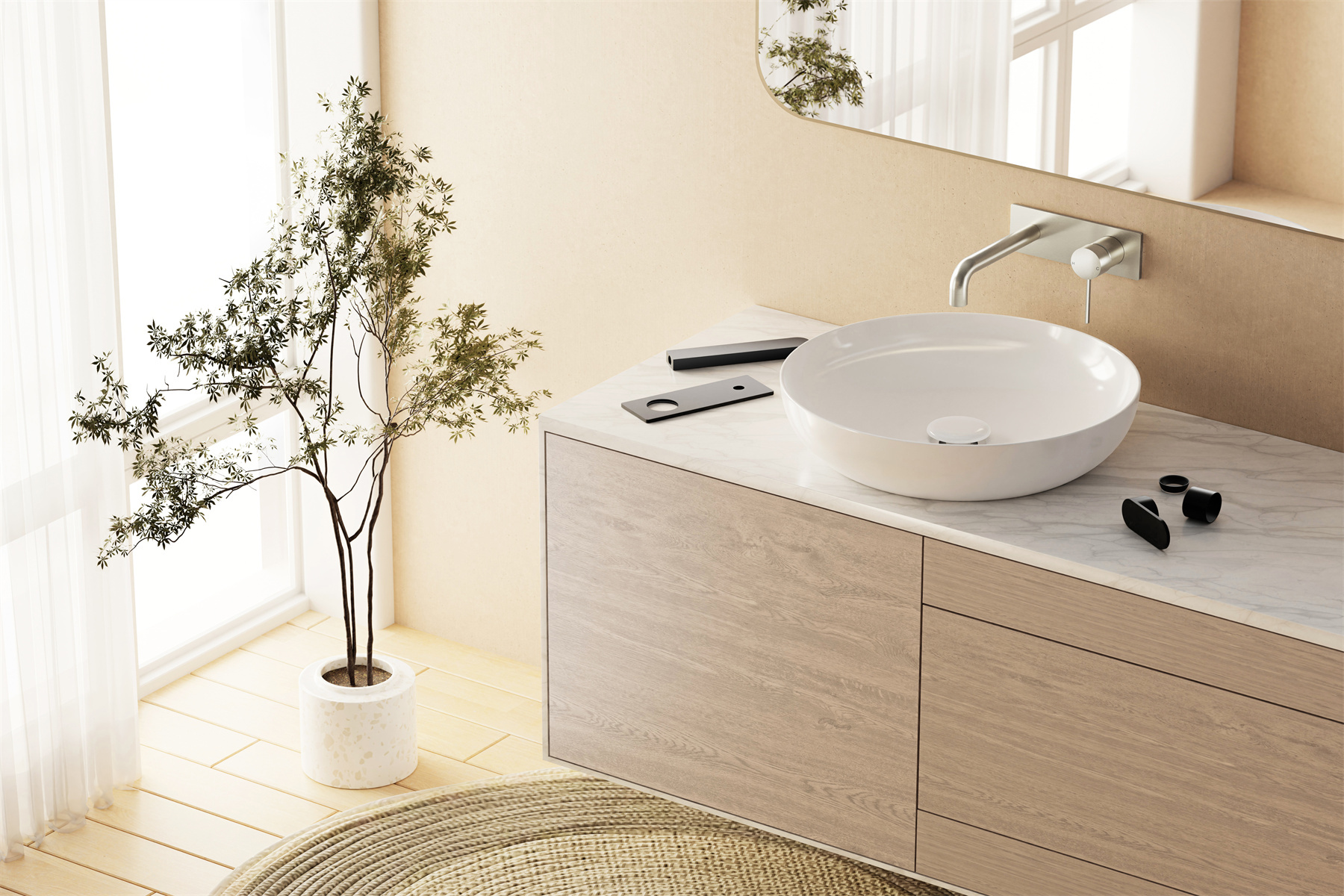
- Bathroom Vanities: Pair honed limestone with brushed nickel tapware for spa-like calm.
Limestone Benchtop Pros & Cons (Compared to Marble, Granite & Quartz)
Advantages:
- Natural and sustainable — minimal processing.
- Warm, organic texture that never looks “engineered.”
- Cooler surface ideal for pastry or dough work.
- Easy to cut and shape for custom details.
Drawbacks
- Softer than marble and granite; can chip at corners.
- Prone to etching from acids.
- Requires sealing and gentle cleaning routines.
Limestone benchtop maintenance tips:
- Wipe spills immediately — acids can dull the finish.
- Avoid placing hot pans directly on the surface; use trivets.
Also Read:[Guide] Calming Colors in Interior Design: Expert Design Tips to Create Peaceful, Stylish Homes
Bathroom Bliss — Using Limestone in Vanities, Showers & Walls

Why Limestone Works Beautifully in Bathrooms
The stone’s natural tone softens light, creating a spa-like feel that’s both luxurious and grounding. It pairs seamlessly with modern fittings and can make even compact bathrooms feel sophisticated.
Thanks to its natural coolness and slip resistance (in brushed or honed finishes), limestone is well suited for Australian wet areas — just ensure proper sealing and waterproofing behind tiles.
Design Inspiration: Limestone Bathroom Ideas
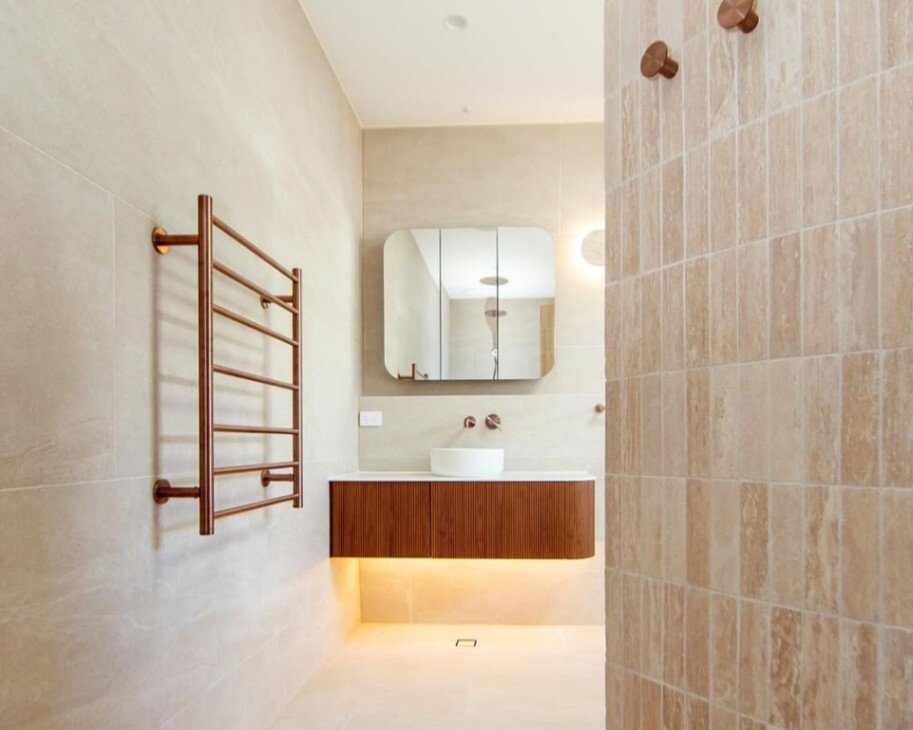
- Integrated Vanities: Create a seamless benchtop and basin from a single block of limestone.
- Full-Height Walls: For minimalist luxury, clad entire shower walls in large-format slabs.
- Feature Niches: Frame recessed shelves in a contrasting stone tone for depth.
- Limestone + Brass: The golden warmth of brushed brass tapware enhances limestone’s creamy undertones.
- Light Play: Pair with LED under-vanity lighting for a hotel-inspired finish.
🔹Designer Tip: If your bathroom receives significant natural sunlight (for example large windows, skylights or west-/north-facing glazing), you might consider specifying a cool-toned limestone (such as a grey-hued limestone) instead of a light creamy/beige tone. Cooler tones may reduce the visual impact of any subtle yellowing or warm-colour shifts that can arise from prolonged exposure to light, minerals oxidising, or moisture/cleaning-agent interactions.
Choosing Limestone Finishes for Wet Zones
- Honed: Best for walls and vanity tops — smooth but not slippery.
- Brushed or Sandblasted: Ideal for floors and showers where grip matters.
- Tumbled: Offers rustic charm but requires extra sealing.
Always ensure waterproofing membranes comply with Australian Standard AS 3740 before installation.
Also Read:[GUIDE] Dopamine Decor & Interior Design Tips to Boost Your Mood
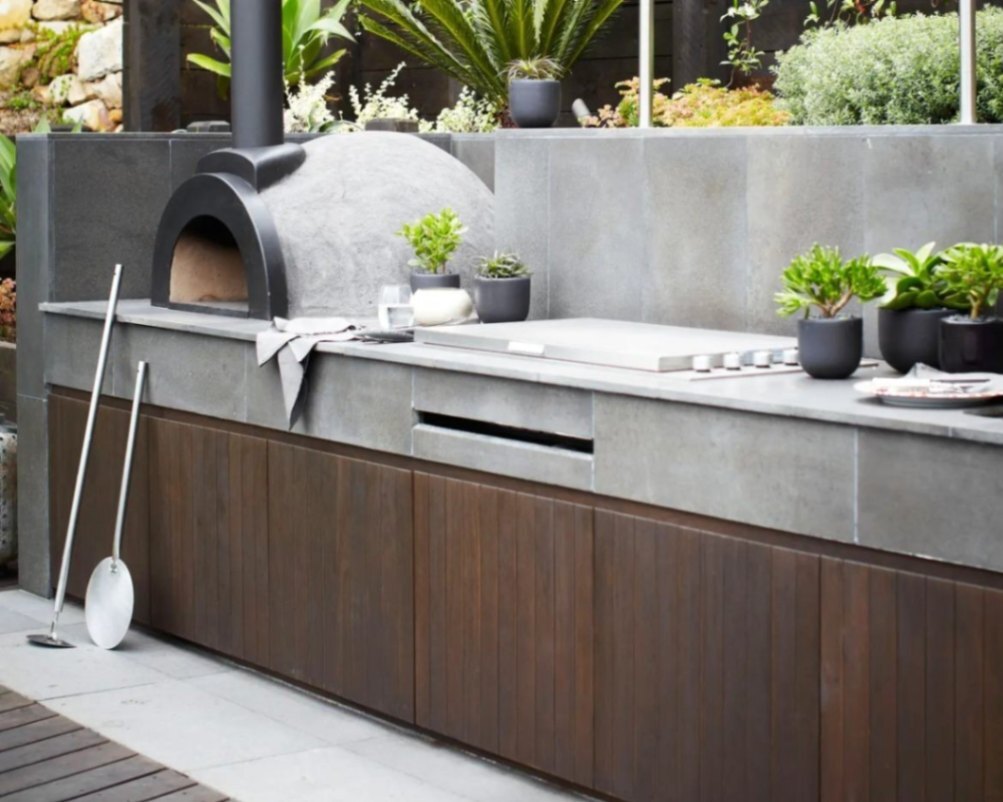
Outdoor Charm — Limestone for Patios, Pool Decks & Facades

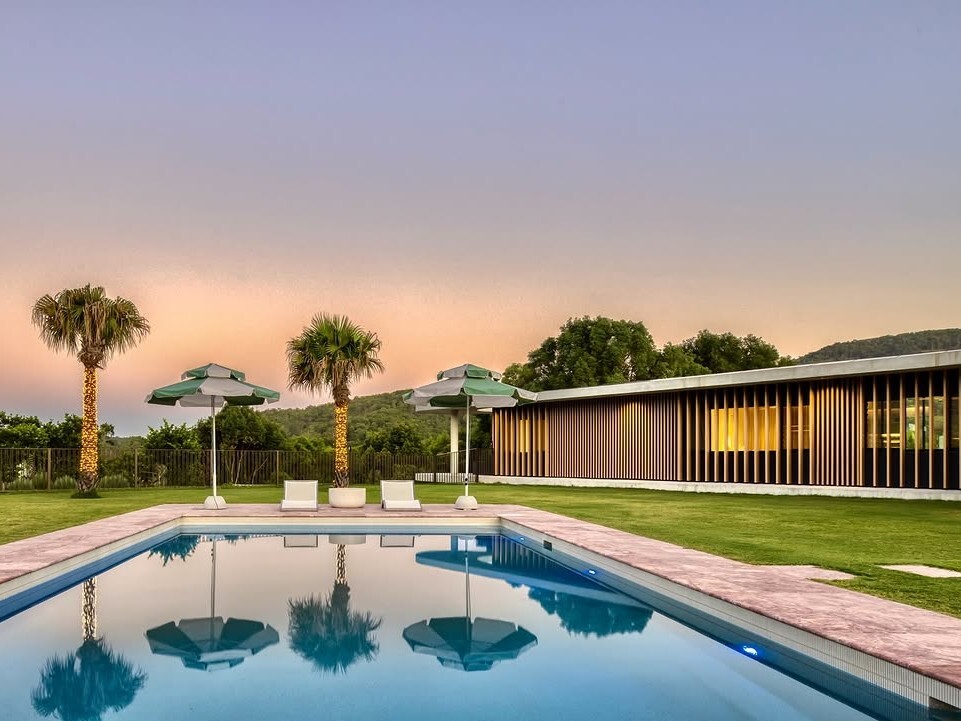
Photo by Joanne Dale
Limestone Outdoors: Durable Elegance Under the Sun
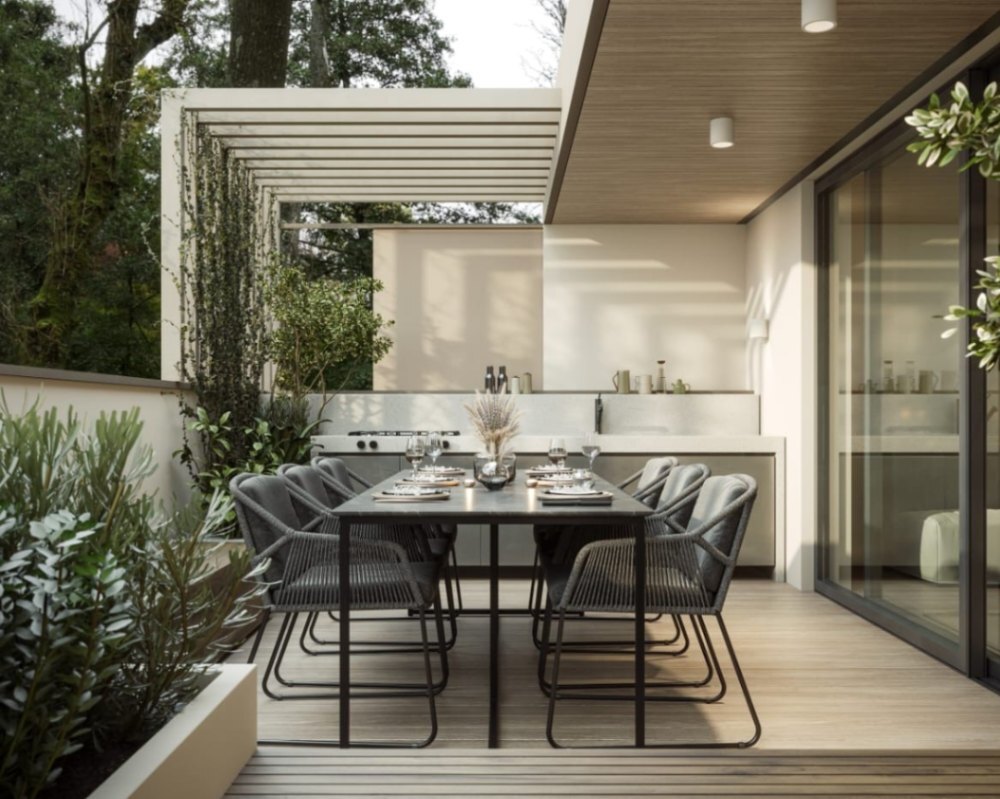
- Ideal for Australian outdoor living — natural tones reflect heat, keeping surfaces cooler underfoot.
- Choose sandblasted, bush-hammered, or flamed finishes for slip resistance around pools and decks.
🔹Coastal tip:Use denser imported limestones (e.g. Jerusalem Gold, Capri) that resist salt attack better than porous local varieties.
Wall Cladding, Steps & Architectural Features
- Limestone cladding adds texture and timeless character to façades.
- Use large-format panels with concealed fixings for a clean, modern look, or split-faced tiles for rustic appeal.
- For steps and pool coping, specify 50 mm-plus thick stone with eased or bullnose edges for safety and comfort.
Landscaping with Limestone
- Perfect for retaining walls, garden edging, steps, and custom benches.
- Pairs beautifully with native Australian plants such as Lomandra, Grevillea, or Kangaroo Paw for natural contrast.
🔹Design Inspiration:For a Hamptons-style effect, combine white limestone pavers with charcoal borders and matching planters for symmetry and definition.
Also Read: Japanese Zen Garden Ideas: Tranquil Design Principles for Effortless Outdoor Serenity
How to Make Your Limestone Last a Lifetime — Sealing, Cleaning & Repair

Sealing 101: Protecting Against Time & Stains
Always seal new installations immediately after grouting using a penetrating sealer. Penetrating sealers don’t alter appearance and allow the stone to breathe, unlike glossy topical coatings.
Resealing Frequency:
- Kitchens: Every 12–18 months.
- Bathrooms: Every 2 years.
- Outdoor areas: Annually due to UV exposure.
Long-Term Maintenance Checklist
| Task | Frequency | Notes |
| Sweep/Vacuum | Weekly | Prevent grit scratches |
| Mop with Neutral Cleaner | Weekly | Use microfibre mop |
| Reseal (Floors/Benchtops) | Every 12–18 months | Penetrating sealer only |
| Inspect Grout & Joints | Yearly | Reseal if cracking |
| Professional Honing | Every 5–7 years | Restores lustre |
Also Read:How to Choose Tapware for Kitchen & Bathroom | Smart, Stylish & Sustainable Living
Next Step — Elevate Your Limestone Look with Nero Tapware

Limestone’s understated luxury deserves fixtures that share its refinement.Nero Tapware offers Australian-designed collections that perfectly echo the stone’s natural elegance. Our wide range of finishes brings visual warmth and sculptural precision that amplify limestone’s organic tones.
Pairing Ideas:
- Chrome + Pale cream or silver-grey limestone: Crisp, modern, and low-maintenance.
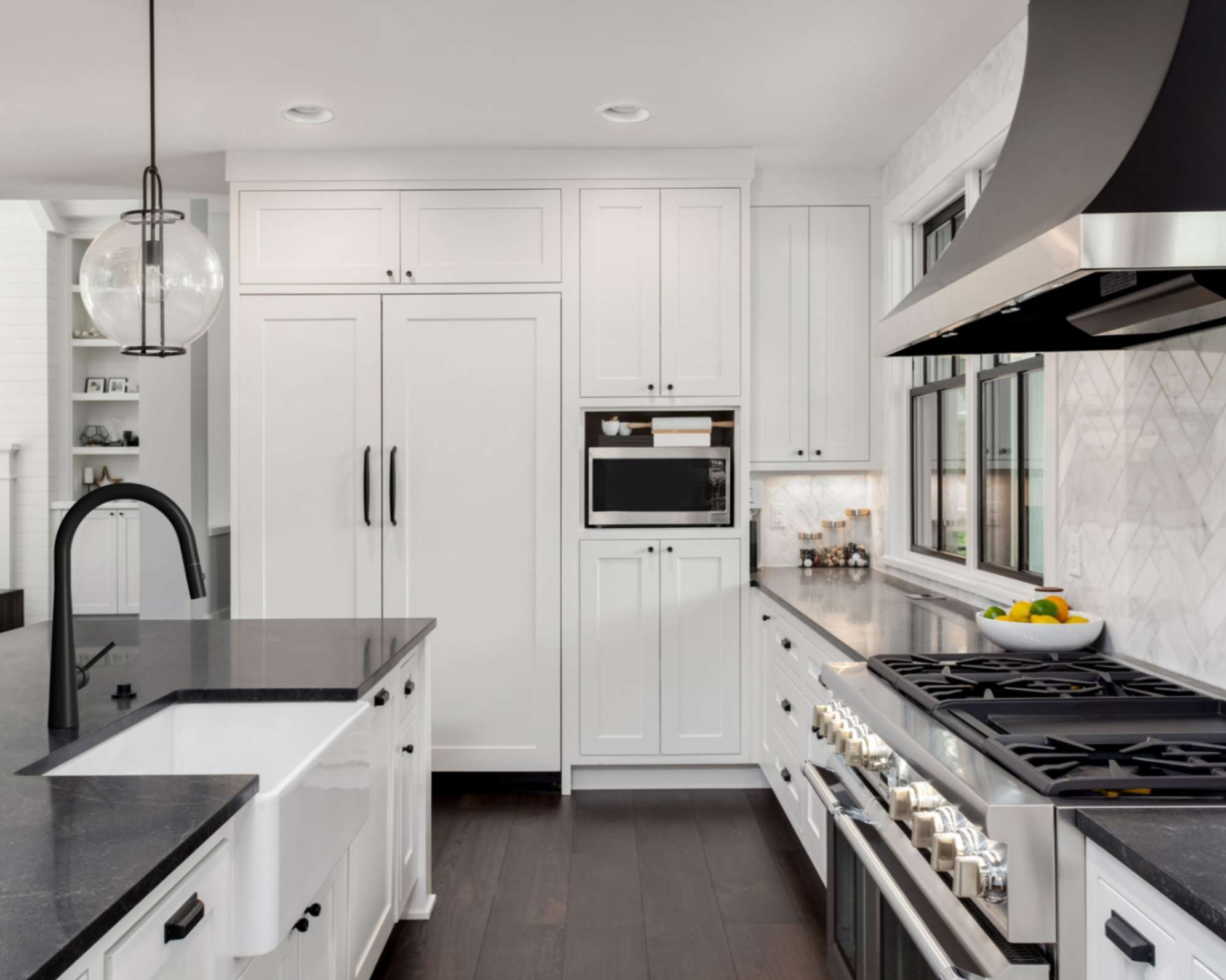
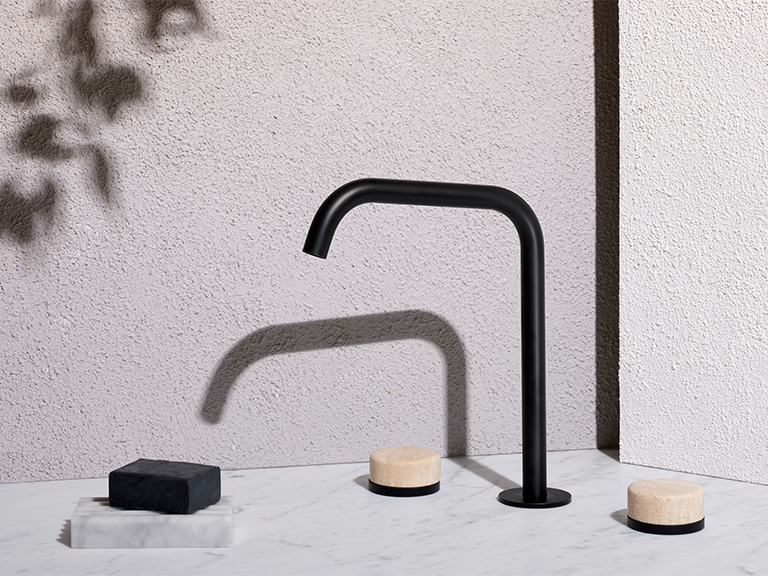
- Matte Black + Honed beige or cool grey limestone: Sophisticated, architectural contrast.
- Brushed Nickel + Cream, light taupe, or shell-toned limestone: Spa-like serenity for coastal or transitional aesthetics.
- Gunmetal +Silver, charcoal, or fossil-rich grey limestone: Industrial meets earthy grounding in modern homes.
- Brushed Gold +Beige, honey, or soft ivory limestone: Coastal luxe or classic Mediterranean.
- Graphite +Cool-toned grey or blue-grey limestone: Refined modern minimalism for monochrome bathrooms.
- Brushed Bronze + Beige or golden-toned limestone: Heritage warmth for modern classics in Federation-style bathrooms or luxury heritage renovations.
- Matte White + Ivory or pearl limestone: Coastal homes, spa bathrooms, or children’s ensuites where brightness is key.
Nero’s tapware meets WaterMark Certification and WELS ratings, ensuring durability and water efficiency in line with Australian standards. Our products are stocked nationwide, making it easy for homeowners and specifiers to coordinate fixtures with new or existing stonework.
Now that you understand everything you need to know about limestone, the next step is creating harmony between surface and fittings. Visitnerotapware.com.au to explore collections that complement limestone’s tactile charm — from minimalist mixers to statement showers — and complete your Australian home with enduring style.